
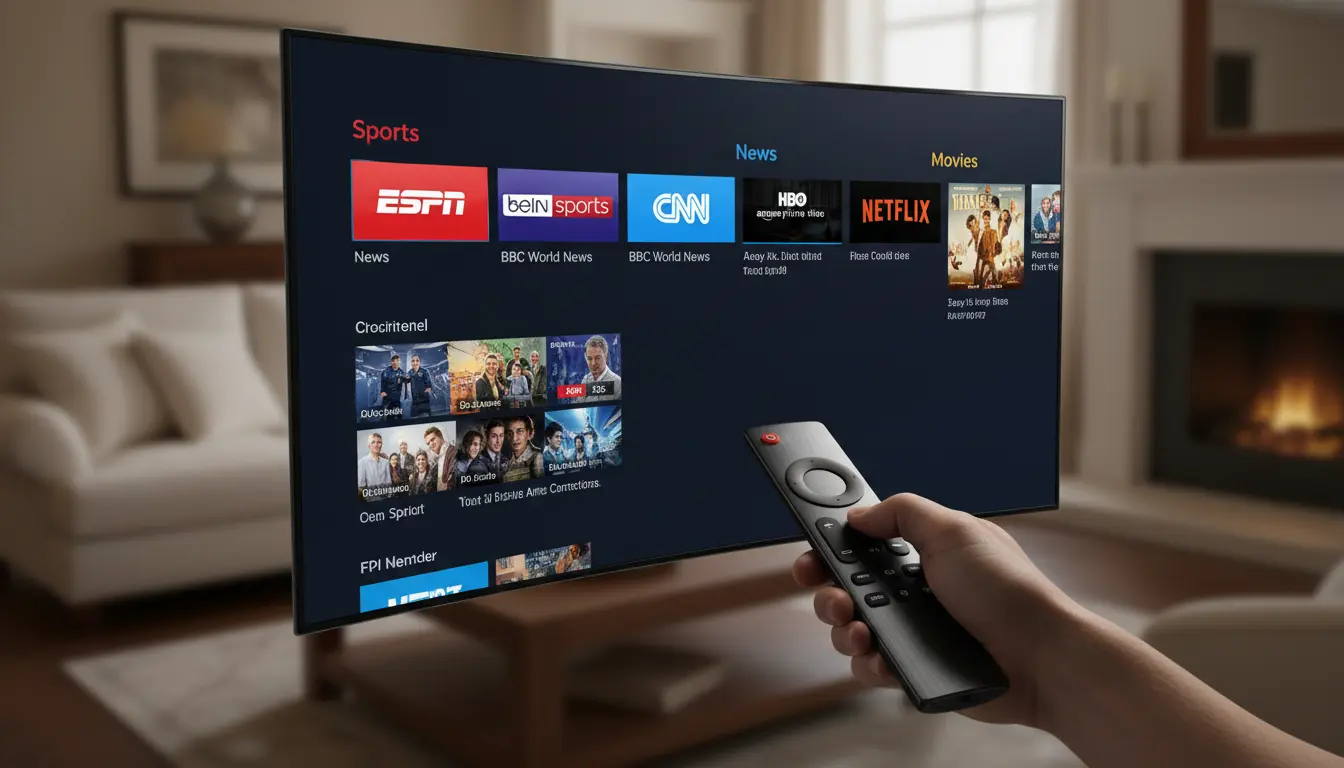
What is IPTV? IPTV stands for Internet Protocol Television — a technology that delivers television content over your broadband internet connection instead of traditional satellite dishes or cable lines. The iptv meaning is simple: it's TV over the internet, allowing you to stream live channels, movies, and on-demand content on any device with an internet connection.
Television habits across Australia are shifting rapidly as households move away from traditional cable, satellite, and terrestrial antenna setups. In their place, flexible, on-demand entertainment delivered through high-speed broadband networks has become the new standard.
Understanding what is iptv empowers you to navigate this digital transformation, eliminate unnecessary hardware fees, and unlock access to thousands of live channels, sports broadcasts, and international libraries.
Key Takeaways
- ✓ Internet-Based Delivery: IPTV streams live television and on-demand video over private or public IP networks instead of satellite dishes or aerial antennas.
- ✓ Total Viewing Freedom: Enjoy live broadcasts, Video-on-Demand (VOD), and multi-day Catch-up TV on any compatible smart device.
- ✓ Infrastructure Matters: Smooth, buffer-free streaming relies on a stable NBN broadband or 5G connection with minimum recommended speeds of 25+ Mbps for HD and 4K playback.
- ✓ Legality & Security: Choose authorized iptv providers operating within Australian broadcasting regulations to ensure data security and uninterrupted service.
What is IPTV? Meaning and Definition
To understand what is iptv, it helps to start with the core terminology.
The iptv meaning stands for Internet Protocol Television. Broadly speaking, the formal iptv definition describes the delivery of television content over a packet-switched network using the Internet Protocol (IP) suite, rather than traditional terrestrial, satellite dish, or coaxial cable formats.
+-----------------------------------------------------------------------+
|                    Traditional Broadcast vs IPTV                        |
|                                                                       |
|  Traditional Broadcast:                                                |
|  [ Broadcast Tower / Satellite ] ────(Constant Mass Broadcast)────► [ All TVs Simultaneously ]
|                                                                       |
|  IPTV Network Stream:                                                  |
|  [ Content / Media Server ] ───(Packeted IP Stream on Demand)───► [ Selected User Device ]
+-----------------------------------------------------------------------+
How IPTV Differs from Traditional TV
Traditional broadcasting transmits every channel continuously through radio frequency signals or physical cables. Whether your television is turned on or off, the signal is constantly being broadcast.
In contrast, iptv streaming operates on a unicast/multicast request basis. When you select a channel or movie, your device requests data packets directly from the provider's server. Content is only sent to your display when you ask for it, allowing for interactive controls like pausing live TV, rewinding, or instant search indexing.

| Feature | Traditional Cable / Satellite | Modern IPTV Streaming |
|---|---|---|
| Delivery Medium | Coaxial Cable, Satellite Dish, Antenna | High-Speed Internet (IP Network) |
| Content Delivery | Fixed linear schedule broadcast to all | On-demand packet streaming to specific devices |
| Hardware Required | Set-top box, wall outlets, satellite dish | Smart TV, FireStick, Mobile App, PC, Apple TV |
| Device Portability | Tied to a specific room or outlet | Watch anywhere with an active internet connection |
| Interactivity | Limited (Basic EPG, local DVR) | High (Pause, Rewind, Catch-up TV, VOD Libraries) |
How Does IPTV Work? The Technology Explained
Demystifying how does iptv work requires looking at the behind-the-scenes digital pipeline that turns raw video data into seamless viewing on your screen.
1. Data Packetization & Compression
Raw high-definition video requires massive data bandwidth. Servers compress video streams using modern codecs (such as H.264, H.265/HEVC, or AV1) and break the data down into tiny IP data packets for transmission across broadband lines.
2. Streaming Protocols & Buffering
When you launch an iptv subscription, streaming protocols manage the flow of data packets. Your playback app pre-loads a small buffer of data seconds ahead of real-time playback, preventing screen freezes or resolution drops if your network experiences slight speed fluctuations.
3. Core Infrastructure Components
- Media Content Servers: Centralized data hubs storing live TV feeds, sporting broadcasts, and vast Video-on-Demand (VOD) archives.
- Middleware Systems: The software bridge connecting the app interface to the backend servers. It handles user login authentication, billing, electronic program guide (EPG) loading, and channel selection.
- Client End-User Devices: Decoding applications running on Smart TVs or streaming players process incoming data packets into smooth video.
Primary Types of IPTV Services Available
Modern iptv services fall into three primary consumption categories designed to match diverse viewing habits across Australia:
+-----------------------------------------------------------------------+
|                    IPTV Service Formats                                |
|                                                                       |
|  ┌─── 1. Live TV Streaming (Real-time Sports, News, Local TV)        |
|  │                                                                   |
|  ├─── 2. Video on Demand (VOD) (On-demand Movies & TV Series)        |
|  │                                                                   |
|  └─── 3. Catch-Up TV (Time-shifted Broadcast Replays)               |
+-----------------------------------------------------------------------+
1. Live TV Streaming
Provides real-time broadcasting identical to traditional television. This is essential for live sports events (AFL, NRL, Formula 1, Premier League), current affairs, and local network news (Seven, Nine, 10, ABC, SBS).
2. Video on Demand (VOD)
Enables users to browse an extensive catalog of movies, documentaries, and full television series. You can play, pause, fast-forward, or stop content at any time without following a rigid broadcast calendar.
3. Catch-Up TV Features
Bridges the gap between live broadcasts and VOD. Missed an episode that aired three days ago? Catch-up TV records live channels automatically on cloud servers, allowing you to replay aired broadcasts up to 7 days after their original broadcast time.

Major Benefits of IPTV for Australian Viewers
Switching to a modern iptv subscription provides clear operational and financial advantages over old-school broadcasting methods.
-
Significant Cost Savings
Consolidating live television and VOD content over existing broadband eliminates dish installation costs, monthly box rental fees, and compulsory 12-to-24-month lock-in contracts.
-
Unrivaled Channel Diversity
Gain access to thousands of localized iptv channels, international news networks, and multicultural feeds tailored for Australia's diverse population.
-
Multi-Device Compatibility
Stream content on living room Smart TVs, tablets while traveling, or smartphones on the go using a single account.
-
Enhanced Interactive Features
Includes integrated Electronic Program Guides (EPG), smart content search, multi-screen viewing mode, and personalized recommendation engines.
IPTV Setup Guide & Hardware Requirements
Getting started with an iptv provider requires minimal technical setup. Ensure your home network meets these hardware and speed benchmarks for ideal performance:
Internet Speed Benchmarks
| Quality Standard | Minimum Download Speed | Recommended NBN Tier |
|---|---|---|
| Standard Definition (SD) | 3 – 5 Mbps | NBN 12 / Basic |
| High Definition (1080p HD) | 10 – 15 Mbps | NBN 25 / Standard |
| 4K Ultra HD Streaming | 25+ Mbps | NBN 50 / Fast |
| 8K Ultra HD / Multi-Screen | 50 – 100+ Mbps | NBN 100 / Superfast |
Equipment Checklist
- Streaming Device: Smart TV (Samsung, LG, Android TV), Amazon FireStick 4K, Apple TV 4K, or NVIDIA Shield.
- Stable Network Connection: Active NBN or 5G home broadband. Tip: Use a hardwired Ethernet cable for static TVs to eliminate Wi-Fi latency.
- Player Application: IPTV Smarters Pro, TiviMate, IBO Player, or native provider apps.
Legal Considerations for IPTV in Australia
Navigating digital entertainment safely requires understanding the regulatory landscape in Australia:
- Licensing & Copyright: Authorized iptv providers obtain formal broadcasting licenses from content owners and studio distributors.
- Regulatory Authorities: In Australia, media compliance and broadcasting standards are monitored by the Australian Communications and Media Authority (ACMA).
- Identifying Legitimate Services: Legitimate providers offer transparent pricing, encrypted payment processing, detailed terms of service, and dedicated customer support channels. Avoid unverified services offering thousands of premium channels for unrealistically low prices without distribution credentials.
Troubleshooting Common IPTV Streaming Issues
If you encounter technical hiccups while streaming, use this practical checklist to restore your stream:
| Problem | Potential Cause | Quick Solution |
|---|---|---|
| Frequent Buffering | Network congestion or Wi-Fi jitter | Connect an Ethernet cable directly from your router; restart your modem. |
| App Freezing / Lag | Overloaded application memory | Go to device settings ➔ Apps ➔ Select IPTV Player ➔ Clear Cache. |
| Audio/Video Out of Sync | Software decoding conflict | Change playback settings in your IPTV player from Software (SW) to Hardware Decoding (HW). |
| Channel Load Failures | Outdated M3U/EPG data | Reload your playlist or update your Electronic Program Guide (EPG) inside app settings. |
Frequently Asked Questions (FAQ)
Now that you understand what is iptv, it's time to make the switch. With iptv services offering thousands of channels, on-demand content, and multi-device support, there's never been a better time to cut the cord. Choose a trusted iptv provider like Australia-IPTV and experience the future of television today. Start your journey with a free trial and discover why millions of Australians are embracing iptv streaming!